
Packaged Drinking Water Plant: Process Steps and What You Need
The process steps in a packaged drinking water plant, from raw water to filling: filtration, RO, ozone or UV, and what to check on licences and standards.
G1 Aqua engineering team
3 min read
A packaged drinking water plant takes ordinary raw water and turns it into water that is safe in a sealed bottle, jar or pouch. The steps are well known. What decides quality is how carefully each one is run, and how clean the filling area is.
The process, step by step
- Raw water storage. A tank holding borewell or other source water. It keeps the supply steady.
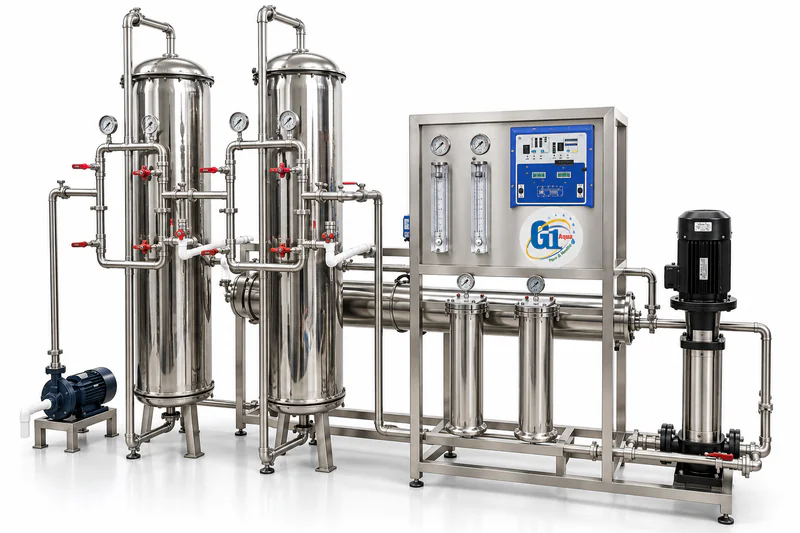
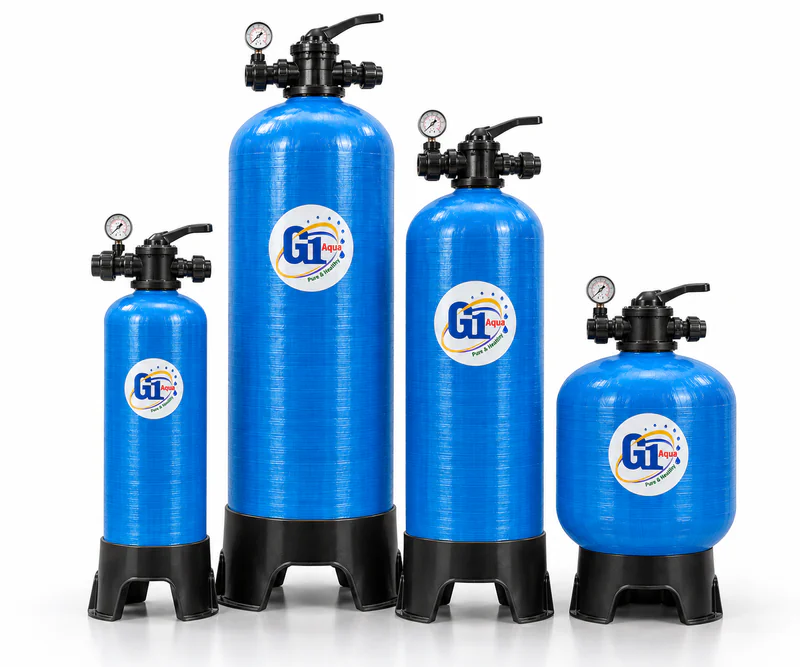
- Sand filtration. A pressure filter removes silt and suspended particles. See FRP pressure vessels.
- Carbon filtration. Removes chlorine, colour, odour and some organic matter. See activated carbon.
- Softening or anti-scalant. Protects the RO membranes from scale. See anti-scalant chemicals.
- Cartridge filtration. A 5-micron cartridge is the last guard before the high-pressure pump.
- Reverse osmosis. Removes most dissolved salts, fluoride, arsenic and many other contaminants. See stainless steel RO plant and what is RO.
- Remineralisation or blending, if the product design calls for some minerals back in the water.
- Disinfection. Ozone, UV or both. Ozone leaves no taste when used correctly and gives residual protection in the container. See ozonation versus chlorination and UV purification.
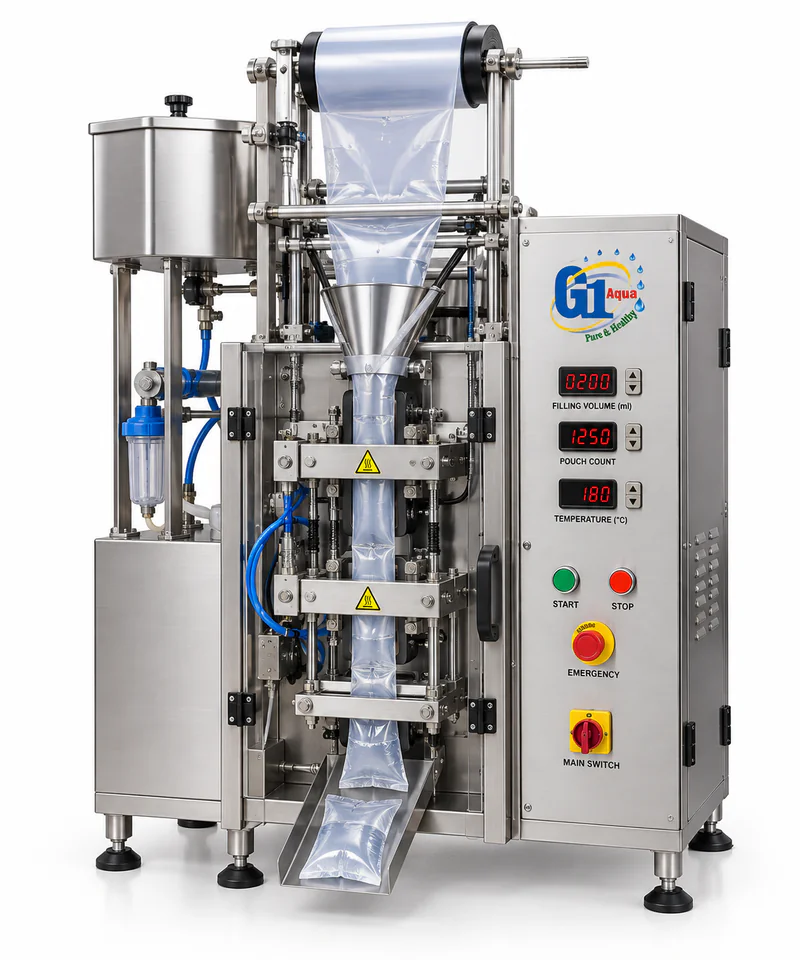
- Filling and sealing. Done in a clean, closed area, with bottles or jars rinsed and sanitised first.
What shapes the design
- Raw water quality. High TDS, iron or fluoride needs different handling from clean low-TDS water. Start with a full report. See how to read a water test report.
- Target volume, and whether it is bottles, 20-litre jars or pouches. A pouch packing machine suits small packs.
- Reject water. RO sends part of the feed to drain. Plan how to use or dispose of it. See RO reject water uses.
Standards and licences
Packaged drinking water is a regulated product in India. The product standard is IS 14543, and food-safety licensing sits with FSSAI, with BIS certification also expected for the product. The rules are updated from time to time, so confirm the current requirements with the authorities and plan for lab testing, a clean premises and record keeping before you apply.
Quality in daily running
- Test finished water on a fixed schedule and keep the reports.
- Change cartridges and clean membranes on the log, not the calendar. See the RO maintenance checklist.
- Keep the filling area closed, clean and free from pests.
- Sanitise jars and bottles every time.
If you are planning a plant, send us the target capacity and a raw water report. Use the contact page.
Know someone with the same problem? Send them this guide.
Products in this guide
Is this your problem?
Send a photo or your water report. An engineer will tell you what fits.
Ask on WhatsApp