
RO Plant Maintenance Checklist: Daily, Weekly and Yearly
A practical maintenance schedule for commercial RO plants: what to log every day, when to backwash and change cartridges, and when to clean the membranes.
G1 Aqua engineering team
3 min read
An RO plant rarely fails suddenly. The numbers drift for weeks first: output falls, pressure rises, the output TDS creeps up. The plants that last are the ones where someone writes the numbers down.
Keep a daily log
Take these readings at the same time each day and write them in a book or sheet:
- Feed pressure, and pressure after the cartridge filter
- Pressure at the membrane inlet and the reject outlet
- Clean water flow and reject flow
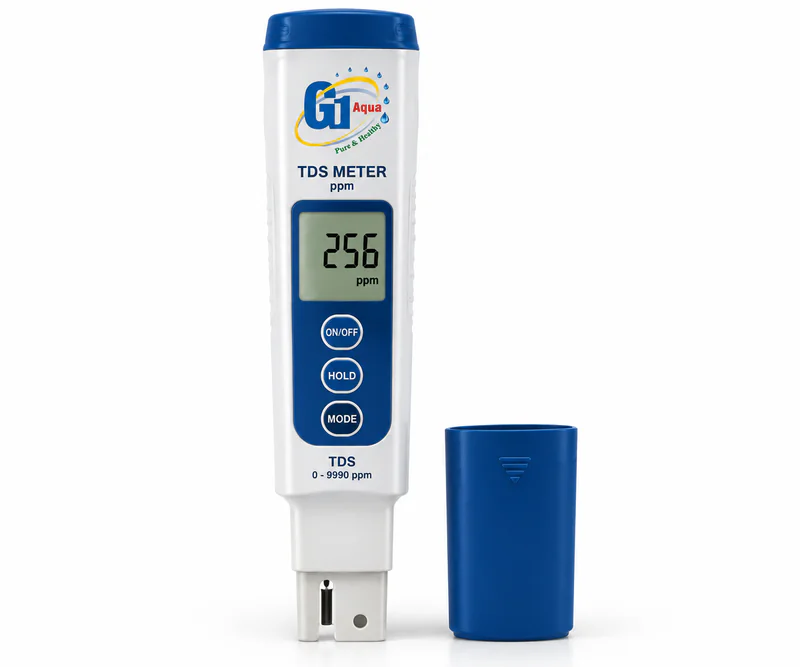
- Feed TDS and clean water TDS (a digital TDS meter is enough)
- Hours the plant ran
A log turns "the plant seems weak" into "output is down 12% since the last cleaning". That sentence is what tells you whether to clean the membranes or change something else.
The schedule
| What | How often | Why |
|---|---|---|
| Read and record the gauges | Daily | Catches drift early |
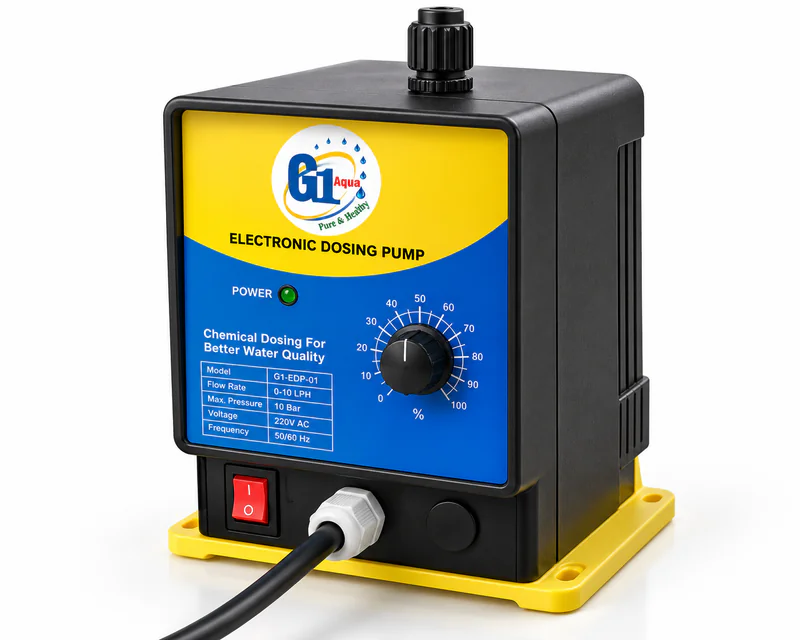
| Check the anti-scalant and chemical tanks | Weekly | A dosing pump with an empty tank means scale |
| Backwash sand and carbon filters | Every few days, more often in muddy water | Stops channels forming and keeps the bed clean |
| Change the 5-micron cartridge | When the pressure drop across it rises, often every one to three months | A clogged cartridge starves the pump |
| Check the dosing pump flow | Monthly | Under-dosing scales the membranes quietly |
| Clean the membranes | When the log says so, not by calendar | See below |
| Check carbon and sand media | Yearly | Carbon stops removing chlorine when it is spent |
| Service the high-pressure pump | As the pump maker advises | The pump is the most expensive moving part |
When to clean the membranes
Clean when the log shows one of these, compared with the first week after a clean:
- Clean water output down about 10% at the same pressure and temperature
- Operating pressure up about 10 to 15%
- Output TDS clearly higher
Scale and metal deposits are removed with an acid clean, usually citric acid. Biological growth and organic fouling are removed with an alkaline clean. Which one to use depends on what the water carries, so ask your supplier before you buy chemicals. Cleaning with the wrong one can set the problem harder.
Before you switch off for a long time
If the plant will stand idle for more than a few days, flush it with clean water first. For a longer break, the membranes need a preservative solution so they do not dry out or grow slime. Never let them dry.
What shortens membrane life
- Chlorine in the feed, from a carbon filter that has run out
- Scale, from skipping anti-scalant or under-dosing it
- Running dry, when the feed tank empties
- Hot water, above what the membrane maker allows
- Starting up without flushing after a long stop
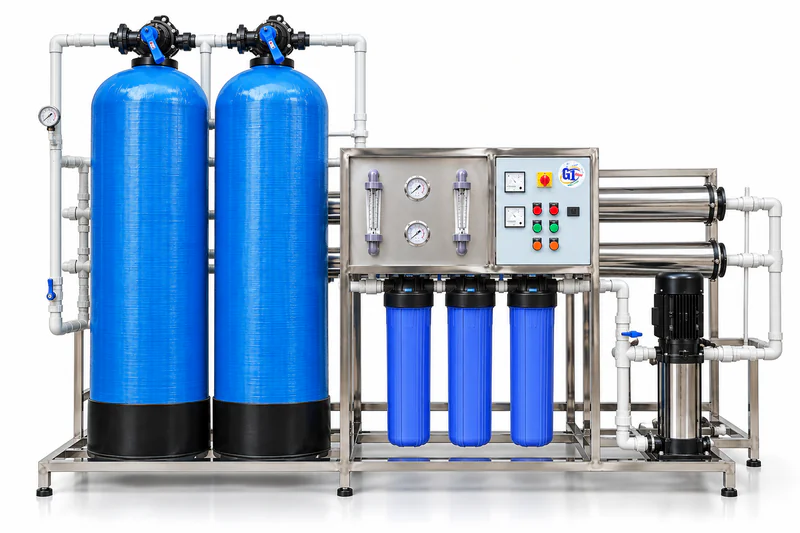
The parts of a plant and how they work together are explained in important components of a reverse osmosis system.
We can service plants in Lucknow and nearby. Call us or use the contact page.
Know someone with the same problem? Send them this guide.
Products in this guide
Is this your problem?
Send a photo or your water report. An engineer will tell you what fits.
Ask on WhatsApp