
How to Choose a Commercial RO Plant: Size, Recovery and Pre-treatment
Pick a commercial RO plant by daily water need, a water test and the recovery rate, not by price alone. A step-by-step guide with a worked sizing example.
G1 Aqua engineering team
4 min read
Most RO plants that disappoint were not badly built. They were chosen before anyone tested the water or counted how much the building really uses. Do these six things first and the quotes you get will be comparable.
1. Work out how much water you need
Count only the water that needs RO: drinking, cooking, ice, and any process that needs low-TDS water. Bathing, flushing and cleaning usually do not.
Take the daily use, divide it by the hours the plant will run, and you have the plant size in litres per hour (LPH).
Example: a hotel needs 12,000 litres of RO water a day. If the plant runs 12 hours, it needs to make 1,000 LPH. A storage tank that covers the busiest hour means you do not have to buy a 3,000 LPH plant just for the morning rush.
2. Test your water first
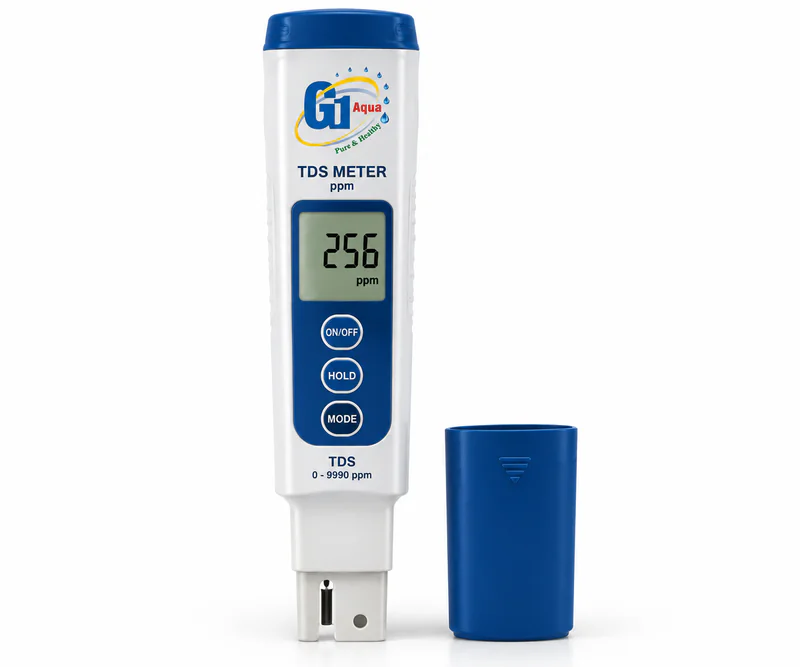
Ask a lab for these: TDS, total hardness, iron, turbidity, pH and chloride. If the lab can add silica, even better. Take the sample after the pump has been running for a few minutes, and from the same source the plant will use. Borewell water can change between summer and the monsoon, so mention it if the source varies.
If you are not sure what the numbers mean, read how to read a water test report.
3. Know the recovery and the feed water
Recovery is how much of the water going in comes out as clean water. At 60% recovery, a 1,000 LPH plant needs about 1,670 litres an hour of feed water. The rest, about 670 litres an hour, leaves as reject.
Check two things before you buy: can your borewell or tank supply that feed rate, and where will the reject go? There are good uses for it, covered in what to do with RO reject water.
4. Pre-treatment decides how long the membranes last
The membrane is the expensive part, and it is damaged by what comes before it. Match the pre-treatment to your test report.
| If the water has | You need |
|---|---|
| Silt, mud, turbidity | A sand filter |
| Chlorine or organic matter | An activated carbon filter |
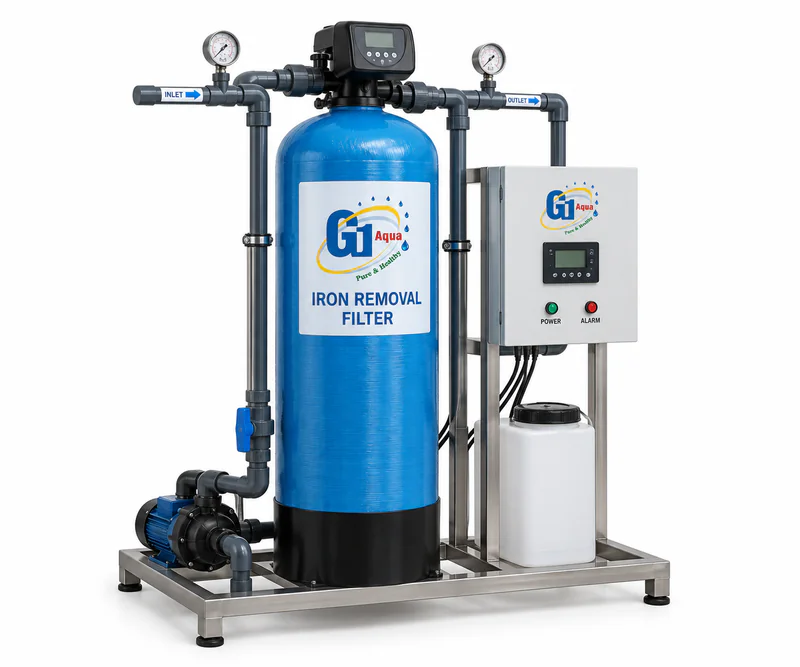
| Iron or manganese | An iron removal filter |
| High hardness | A softener or anti-scalant dosing |
| Fine particles that get through | A 5-micron cartridge filter, always |
Skipping the carbon filter on chlorinated water is the commonest mistake. Chlorine damages most RO membranes, and the damage cannot be undone.
5. Vessels, membranes and the pump
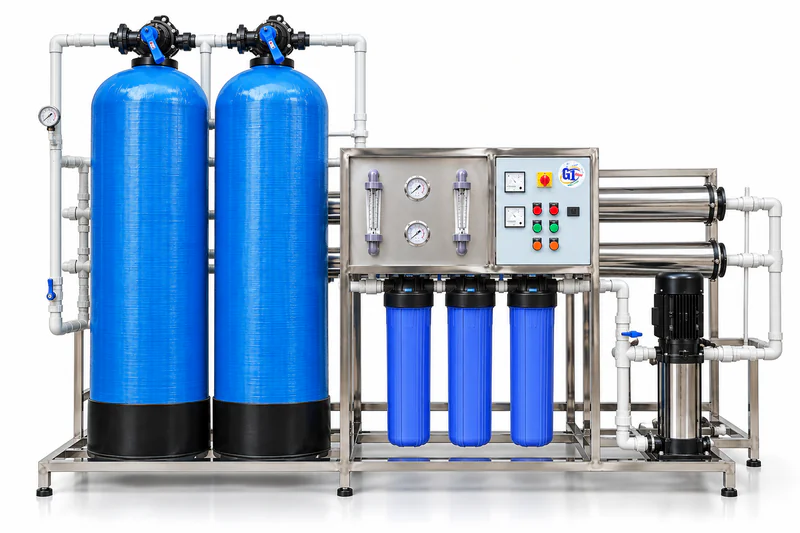
- Vessels: FRP vessels cost less and do not rust. Stainless steel looks better, handles outdoor and hot sites well, and costs more. Both are fine if built properly.
- Membranes: small plants use 4040 membranes; larger ones use 8040. Ask how many, which make, and what each costs to replace.
- Pump and power: larger plants run on three-phase power. Check what your site has.
6. Ask for these in every quote
- The water test report the design is based on
- The expected output TDS and the recovery
- The number and make of membranes
- Every item in the pre-treatment, listed one by one
- The power load in kW
- The warranty, and what it covers
- What installation and training are included
- The yearly cost of cartridges, membranes and chemicals
The cheapest quote often leaves out items 4 and 8.
If you would like us to size a plant, send your water report on WhatsApp or through the contact page. Our commercial RO plants start at 500 LPH, and the 3,000 LPH FRP plant is our largest standard model.
Know someone with the same problem? Send them this guide.
Products in this guide
Is this your problem?
Send a photo or your water report. An engineer will tell you what fits.
Ask on WhatsApp