
Water Treatment for Hotels: What a Hotel Plant Needs
What water treatment a hotel needs: softening for hot water and laundry, filtration, RO for drinking, and disinfection. Plain sizing tips and common mistakes.
G1 Aqua engineering team
3 min read
A hotel uses water in four places: rooms, kitchen, laundry and plant rooms for heating and cooling. Each needs a different quality, so one big RO plant is rarely the right answer. A hotel plant is a set of stages, each sized for its job.
Start with the water report
Everything depends on the source, whether that is a borewell, a municipal supply or a mix. Get a full analysis first. The numbers that matter most are hardness, iron, TDS and turbidity. See how to read a water test report.
The usual treatment train
- Sand and carbon filtration. The base stage. Removes silt, turbidity and chlorine smell, and protects everything after it. See activated carbon filters.
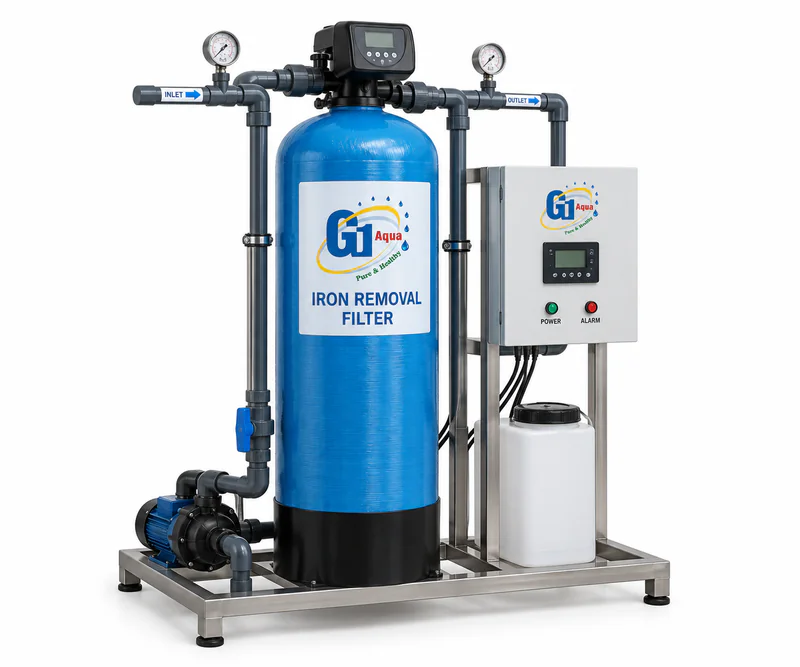
- Iron removal, where the water has iron. Rust stains on white linen and bathroom fittings are the usual complaint. An iron removal filter fixes that.
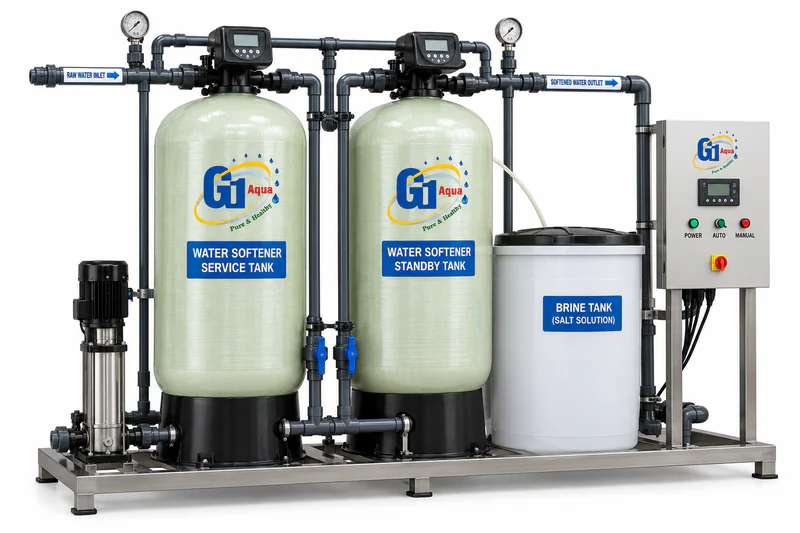
- Softening. Takes hardness out of the water for the geysers, boilers, laundry and showers. Soft water also needs less soap and detergent. See water softening plants, and the sizing example in what size softener do you need.
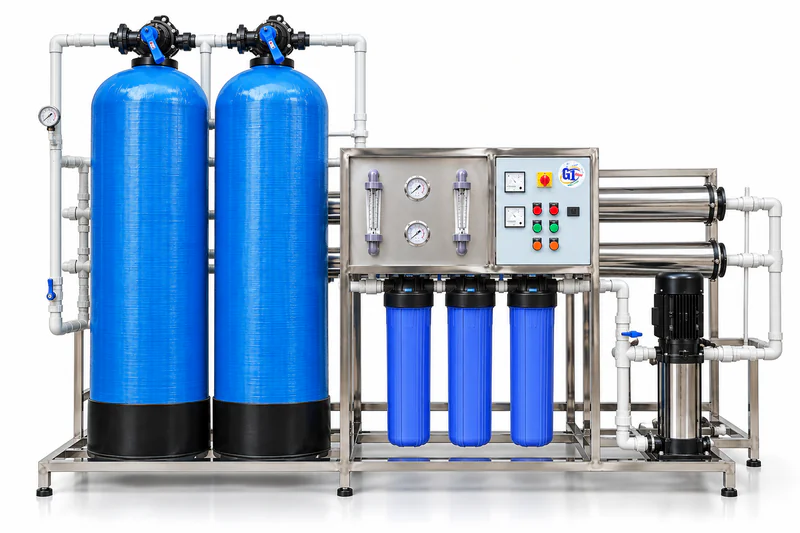
- RO for drinking water. A smaller plant on a separate line, feeding the restaurant, the bar and the room water dispensers. A commercial RO plant of modest size is usually enough.
- Disinfection. Chlorine dosing in the overhead tank, or UV at the point of use. Hot water systems also need attention to Legionella risk. See prevention of Legionella in plumbing.
Where hotels get it wrong
- Treating everything with RO. It wastes water and money. Soft, filtered water is enough for most uses.
- No bypass or standby. A softener regenerates, and during that time it cannot supply. Duplex columns keep soft water flowing at all hours.
- Skipping the pre-filter before RO. Silt and chlorine destroy membranes.
- Mixing lines. Keep RO drinking lines separate from softened lines and label them.
- No log or service plan. Plants drift, as covered in the RO maintenance checklist.
Sizing in one paragraph
Count rooms, laundry load and kitchen use to estimate daily volume, then check the peak hour, usually morning and evening. Size the filters and softener for the peak flow, and the RO for drinking and cooking only. Storage tanks help you buy a smaller plant that runs steadily for longer.
Tell us your room count and send a water report, and we will suggest a layout. Use the contact page.
Know someone with the same problem? Send them this guide.
Products in this guide
Is this your problem?
Send a photo or your water report. An engineer will tell you what fits.
Ask on WhatsApp