
Water Treatment for Apartments and Housing Societies
How a housing society can treat its water: borewell filtration, softening, a common RO point, tank cleaning and upkeep, with the mistakes that cause complaints.
G1 Aqua engineering team
3 min read
A society's water problems usually start at the source and show up at the tap: scale in geysers, white spots on glass, rust stains, a salty taste. A plant fixed at the main line helps every flat at once, which is cheaper than each family buying its own.
Decide what each flat needs
Water for bathing, washing and flushing needs to be filtered and often softened. Water for drinking and cooking needs more. Treating all of it to drinking quality is costly and usually not needed.
A sensible layout
- Borewell or tanker intake into a sump. Keep the sump covered and clean.
- Pressure sand filter and carbon filter at the pump outlet. They remove silt, turbidity and chlorine. See activated carbon filters.
- Iron removal, if the report shows iron. See iron removal filters.
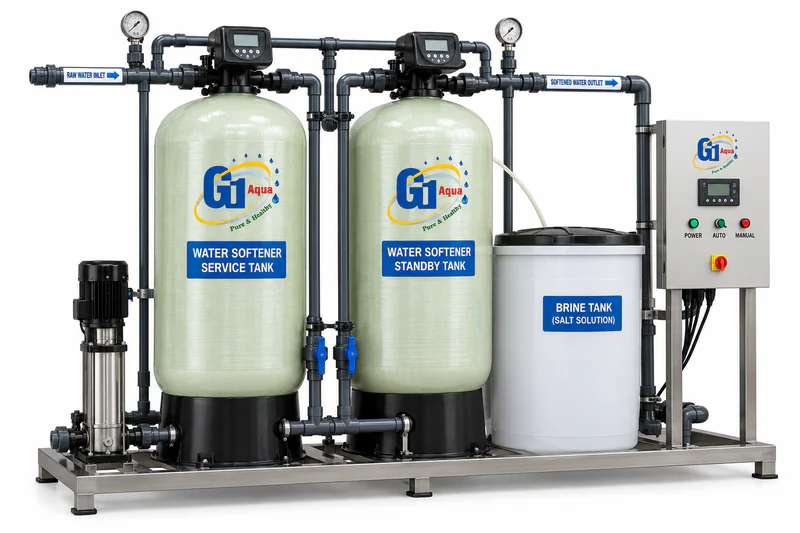
- Softener for the building supply when hardness is high. A duplex unit avoids water cuts during regeneration. Worked sizing is in what size softener do you need.
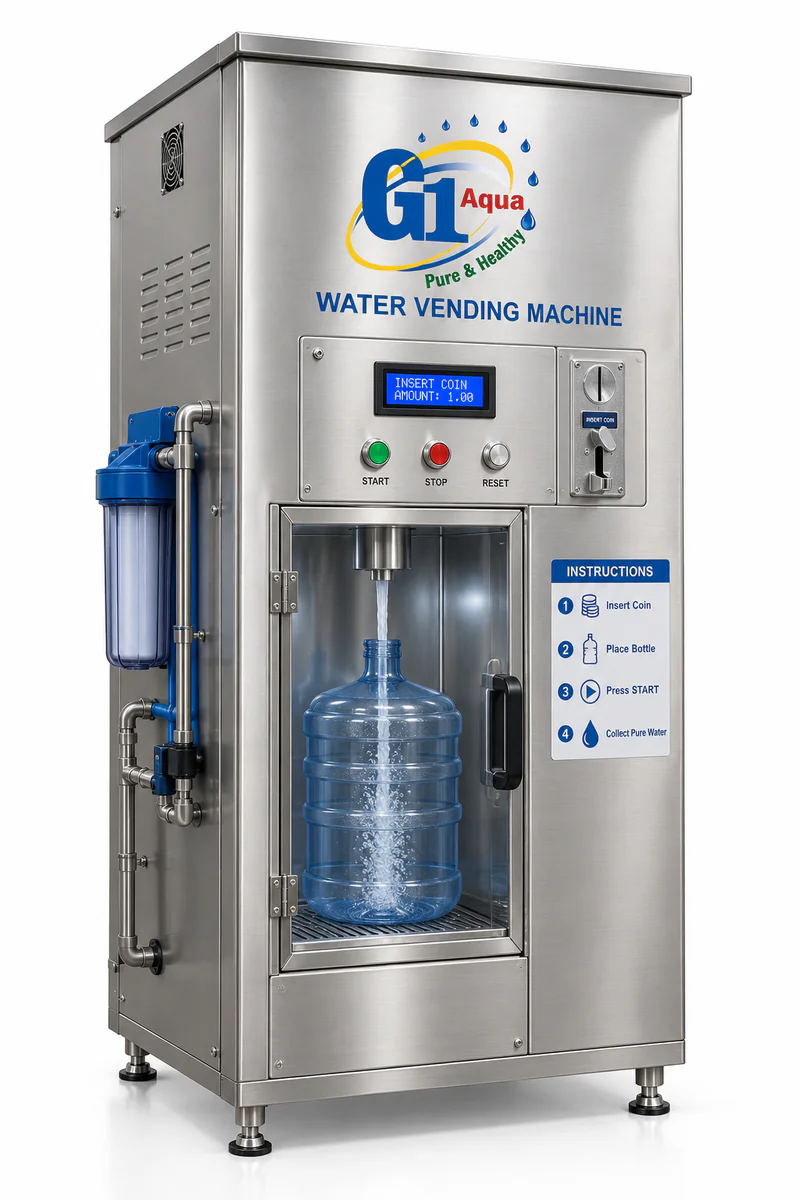
- Common RO point with a tap or vending point for drinking water, in the clubhouse or near the gate. A bottle water vending machine can also serve this role.
- Disinfection with chlorine dosing before the overhead tanks.
Common mistakes
- Buying a plant without a water test. Sizing and media depend on the report. See how to read a water test report.
- Choosing by price alone. A low quote often leaves out the filter stages or uses undersized columns.
- No maintenance plan. Societies change committees every year, and the plant is forgotten. Put the service schedule, salt orders and contacts in a written file.
- Unclear billing. Decide early how running costs are shared, per flat or by use.
- Dirty tanks. Even perfect treated water can be spoiled by a tank full of sediment.
What to ask a supplier
- The design flow and the peak flow it can handle
- What the plant removes, in numbers, against your report
- What consumables it needs each year, and rough quantities
- Who services it, how fast they respond, and what the contract covers
- Whether you can see another society plant that is running
Sewage and reuse
Many societies also run a sewage treatment plant and reuse the treated water for gardening and flushing. That is a separate plant but affects total water demand. See greywater recycling and reuse and our sewage treatment plant range.
Send us your unit count and a water report and we can suggest a layout. Use the contact page.
Know someone with the same problem? Send them this guide.
Products in this guide
Is this your problem?
Send a photo or your water report. An engineer will tell you what fits.
Ask on WhatsApp