
How to Read a Water Test Report: What Each Number Means
A plain guide to a water test report: pH, TDS, hardness, iron, fluoride, arsenic and more, with the IS 10500 limits and what to do when a value is too high.
G1 Aqua engineering team
3 min read
A water test report is a table of numbers that looks harder than it is. Each line says what was measured, how much was found, and the limit it is compared with. Once you know what the main lines mean, you can see in a few minutes whether the water needs treatment and what kind.
Drinking water limits in India come from IS 10500. For a fuller look at the standard, see IS 10500 drinking water specification.
The main parameters
| Parameter | Acceptable | Permissible (no other source) | What it tells you |
|---|---|---|---|
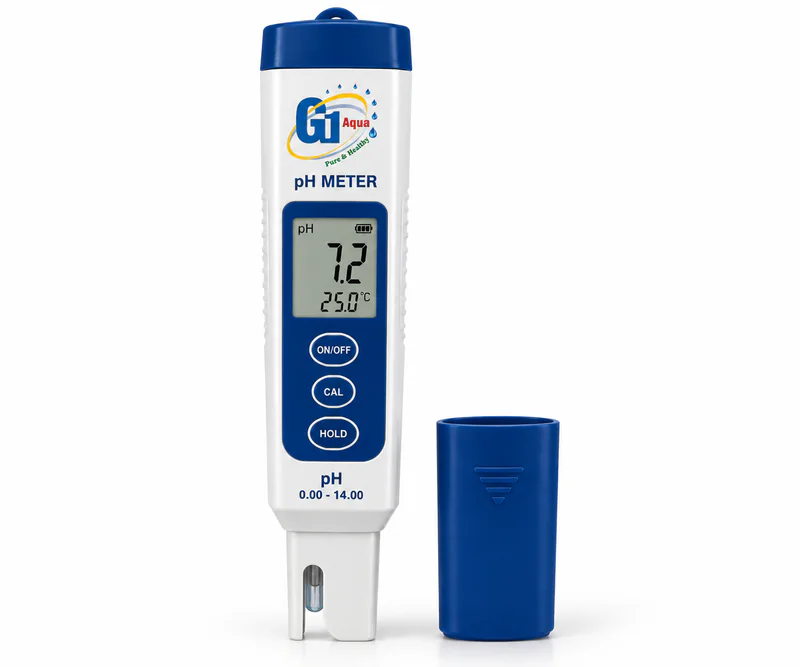
| pH | 6.5 to 8.5 | No relaxation | Acidic or alkaline; affects pipes and treatment |
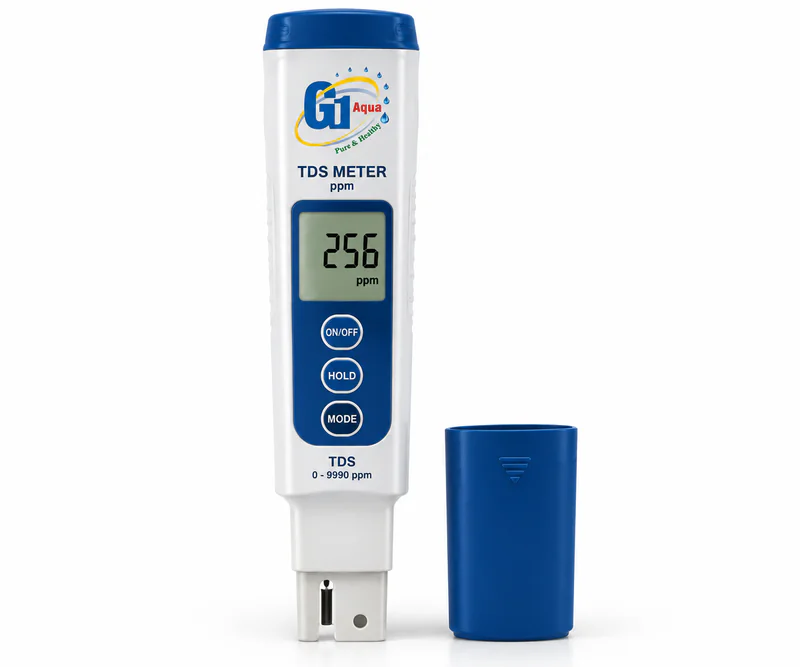
| TDS | 500 mg/L | 2,000 mg/L | Total dissolved salts; taste |
| Total hardness | 200 mg/L | 600 mg/L | Scale in pipes and heaters |
| Calcium | 75 mg/L | 200 mg/L | Part of hardness |
| Magnesium | 30 mg/L | 100 mg/L | Part of hardness |
| Alkalinity | 200 mg/L | 600 mg/L | Buffering; affects scale and chemical dosing |
| Chloride | 250 mg/L | 1,000 mg/L | Salty taste, corrosion |
| Sulphate | 200 mg/L | 400 mg/L | Taste, laxative effect at high levels |
| Iron | 0.3 mg/L | No relaxation | Red stains, metallic taste |
| Turbidity | 1 NTU | 5 NTU | Cloudiness; can hide germs |
| Fluoride | 1.0 mg/L | 1.5 mg/L | Teeth and bones at high levels |
| Arsenic | 0.01 mg/L | 0.05 mg/L | Serious long-term health risk |
| Nitrate | 45 mg/L | No relaxation | Risk to infants |
Check the report's own limits column too. Editions of the standard differ in small details.
How to read the table
- Find the flagged values. Labs mark results above the limit. Start there.
- Look at the unit. mg/L and ppm are the same. NTU is for turbidity. A result in micrograms (ug/L) is a thousand times smaller than the same number in mg/L.
- Compare against both limits. A value between acceptable and permissible is a warning, not a pass.
- Look at the group. High TDS with high hardness and high chloride points to a salty hard source, and an RO plant is the likely answer. High iron with normal TDS points to a filter, not RO.
What to do about common results
- High TDS: reverse osmosis. See methods to reduce TDS.
- High hardness: a softener, or RO with anti-scalant. See methods to soften hard water.
- High iron: an iron removal filter.
- High turbidity: sand filtration, often with coagulant dosing.
- Fluoride or arsenic: specialised media or RO. See fluoride removal methods and arsenic removal techniques.
- Bacteria present: disinfection with chlorine, ozone or UV after filtering.
Sampling matters
A report is only as good as the sample. Use a clean bottle from the lab, let the tap or pump run for a few minutes first, fill the bottle fully, and send it within a day. Test again after a season change, since a borewell can change after the rains.
If you send us your report we can suggest a treatment train. Use the contact page.
Know someone with the same problem? Send them this guide.
Products in this guide
Is this your problem?
Send a photo or your water report. An engineer will tell you what fits.
Ask on WhatsApp