
What Size Water Softener Do You Need? A Worked Example for Hotels and Apartments
Size a water softener from your daily water use and hardness. A worked example shows resin volume, salt use and why large buildings use two columns.
G1 Aqua engineering team
3 min read
A softener that is too small runs out of capacity before the day is over, and hard water gets through. One that is too large costs more and sits half used. The size comes from two numbers you can measure: how much water you use and how hard it is.
The three numbers
- Water to soften per day, in litres. Use your meter reading, not a guess.
- Hardness, in mg/L as calcium carbonate (also written ppm). It is on your water test report.
- What the resin can hold between regenerations. For a standard cation resin with a normal salt dose, plan on roughly 40 to 55 grams of hardness per litre of resin. Your supplier will confirm the figure for their resin.
Worked example: an apartment block
An apartment block softens 20,000 litres a day. The test shows 300 mg/L hardness.
- Hardness load per day: 20,000 litres x 0.3 g per litre = 6,000 g, or 6 kg
- Resin needed for one day between regenerations: 6,000 g divided by 50 g per litre = 120 litres of resin
- Salt per regeneration: at about 120 g of salt per litre of resin, 120 x 120 g = about 14 kg of salt
So a column holding around 120 litres of resin, regenerating once a day, does the job. In practice most suppliers add 15 to 25% margin, because water use and hardness both vary.
If you would rather regenerate every second day, double the resin volume. That means a larger tank and the same salt per litre, but half as many regenerations.
Why large buildings use two columns
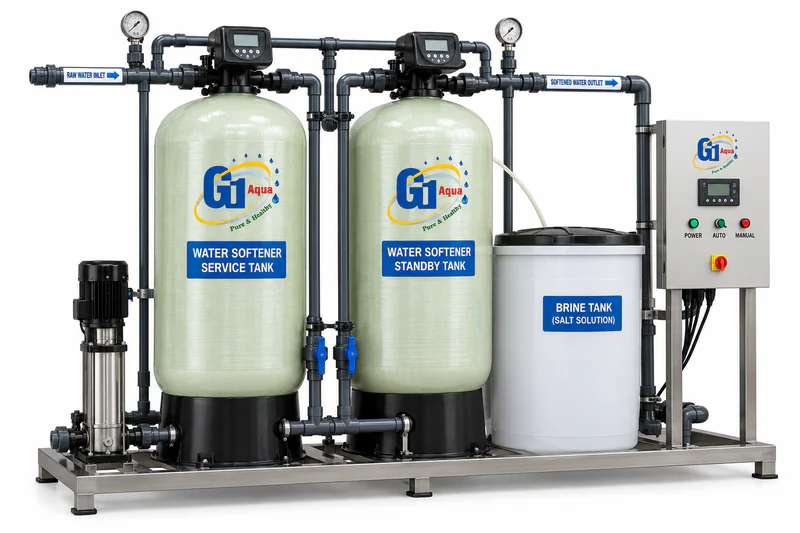
A regeneration takes roughly one to two hours, and the column cannot supply soft water meanwhile. A duplex softener has two columns: one works while the other regenerates, so soft water never stops. For hotels, hospitals and any site with hot water boilers, this is the usual choice.
Flow rate matters as well
Capacity says how much hardness the resin can hold. Flow rate says how fast water can pass through it. A column with enough resin but too thin a bed will leak hardness at peak flow. Give your supplier the peak flow in litres per minute, not just the daily total.
Protect the resin
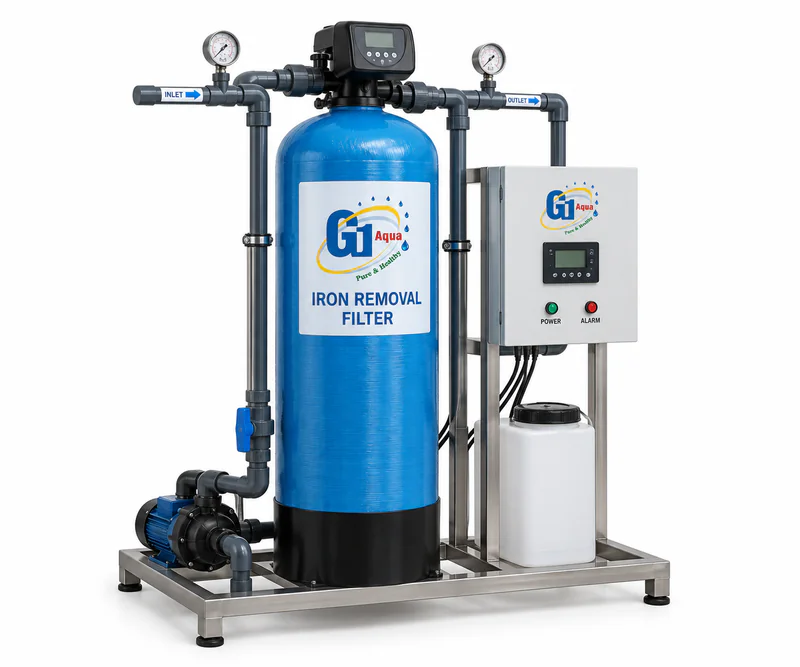
- Iron coats resin beads. Put an iron removal filter first.
- Chlorine slowly breaks resin down. A carbon filter before the softener extends its life.
- Silt blocks the bed. A sand filter first keeps it clean.
Well-kept resin lasts many years, as described in methods to soften hard water.
Softener, RO or both
A softener removes hardness but not TDS. If you want drinking water as well, soften the whole supply and put RO on the drinking line only. Water softener vs RO explains which one fits which job.
Our water softening plants are made to order. Send us your daily use, peak flow and hardness, and we will give you the resin volume and column size.
Know someone with the same problem? Send them this guide.
Products in this guide
Is this your problem?
Send a photo or your water report. An engineer will tell you what fits.
Ask on WhatsApp