
Arsenic Removal from Groundwater: A Silent Poison
Arsenic contamination in groundwater is a massive health crisis affecting millions. Learn about the technologies—Adsorption, Ion Exchange, and Co-precipitation—that can save lives.
G1 Aqua engineering team
3 min read
Arsenic is a naturally occurring semi-metal found in groundwater in many parts of the world (especially the Ganges delta in India/Bangladesh). It is tasteless and odorless.
Chronic ingestion leads to Arsenicosis: Skin lesions, cancer (skin, bladder, lung), and gangrene ("Blackfoot disease").
- The Standard: The WHO limit is 0.01 mg/L (10 ppb).
- The Hotspots: The most affected region is the Ganges-Brahmaputra delta (West Bengal in India and Bangladesh), known as the "largest mass poisoning in history." Other hotspots include Chile, USA (Southwest), and China.
Removal Technologies
1. Oxidation + Co-precipitation (The Industrial Way)
Arsenic usually comes out of the ground as Arsenite (As3+), which is non-charged and slippery—hard to filter. Arsenate (As5+) is negatively charged and sticky—easy to filter.
- Step 1: Oxidation: We chemically convert As3+ to As5+.
- Agents: Chlorine, Ozone, Potassium Permanganate, or Manganese Dioxide.
- Reaction Time: Very fast (seconds).
- Step 2: Co-precipitation: We add an Iron salt (Ferric Chloride).
- The Iron turns into sticky rust particles (Ferric Hydroxide).
- The As5+ gets trapped inside this rust structure.
- Step 3: Filtration: Run the water through a Sand Filter or Membrane to catch the rust sludge. The Arsenic ends up in the sludge.
2. Adsorption Media (The Community/Home Way)
For villages or homes where you can't run a chemical plant, we use media vessels.
A. Granular Ferric Hydroxide (GFH) - The "Gold Standard"
- What is it? It is essentially engineered, dry rust.
- Why it wins: It bonds with Arsenic irreversibly. It works over a wide pH range (5.5 - 9.0) and doesn't dump aluminum into the water.
- Maintenance: "Fill and Forget." Once the media is full (usually 1-3 years), you dump it (safely) and refill. No complex regeneration.
B. Activated Alumina (AA)
- What is it? Aluminum Oxide beads.
- Pros: Cheaper than GFH.
- Cons: Only works well at pH 5.5-6.0. If your water is neutral (pH 7), you MUST add acid to lower the pH, or the AA won't work. It also requires complex regeneration with caustic soda.
3. Molecular Separation (Reverse Osmosis)
RO membranes have a pore size of 0.0001 microns.
- Efficiency: Removes >99% of As5+ and >90% of As3+.
- Advice: Pre-chlorination is recommended to ensure all Arsenic is in the As5+ form for maximum rejection.
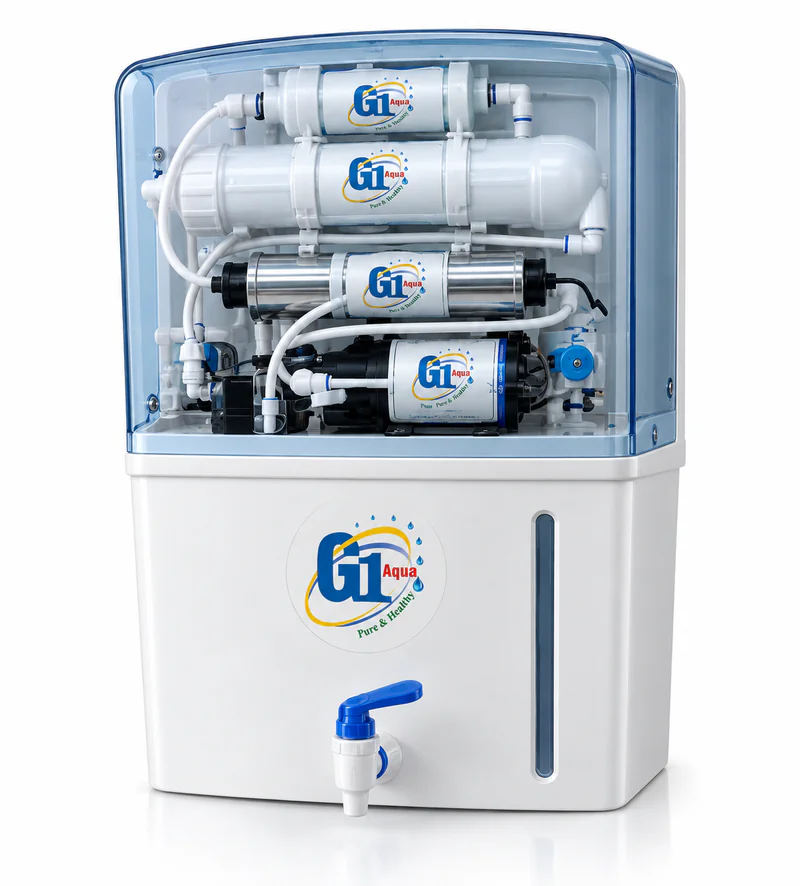
- Best For: Kitchen undersink units.
Technology Comparison
| Feature | GFH (Iron Media) | Activated Alumina | Reverse Osmosis |
|---|---|---|---|
| Removal Efficiency | Very High (>99%) | Moderate (pH dependent) | Very High (>95%) |
| Operation | Simple (Passive) | Complex (pH adjustment) | Power Required |
| Waste | Solid Spent Media | Liquid Sludge | Brine Water |
| Cost | High Media Cost | Low Media Cost | High Equipment Cost |
Questions people ask
Know someone with the same problem? Send them this guide.
Products in this guide
Is this your problem?
Send a photo or your water report. An engineer will tell you what fits.
Ask on WhatsApp